



Table of Contents
- Why Bamboo Socks Are Better for Sensitive Skin
- Best Socks for Sensitive Skin: What Construction Details Matter
- Bamboo vs Cotton Socks for Sensitive Skin
- Bamboo Socks for Eczema and Allergy-Prone Feet
- How to Wash Bamboo Socks to Prevent Irritation
- What to Check Before Buying Bamboo Socks for Sensitive Skin
- Frequently Asked Questions
Last Updated: October 5, 2026
Why Bamboo Socks Are Better for Sensitive Skin
When ordinary fabrics irritate your feet, bamboo socks sensitive skin offer a gentler alternative. At Gemjar socks, we know sensitive skin requires careful fabric selection, and bamboo's softness and breathability make a real difference.
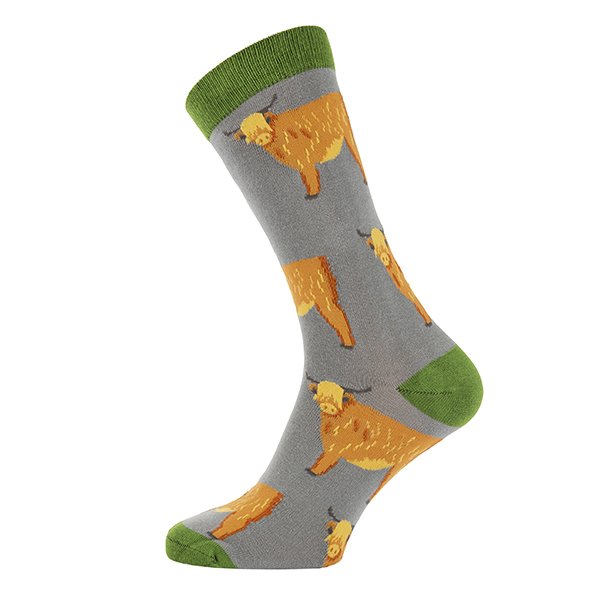
Highland Cow Bamboo crew socks
Bamboo fibers have a naturally smooth surface that reduces friction, while cotton's rougher texture can irritate sensitive areas all day.
Pro TipThe highest-quality bamboo socks contain at least 80% bamboo fiber. Lower percentages mean less of the benefits you're paying for. Check the fiber content on the label before buying.
Natural Fiber Properties and Hypoallergenic Claims
Bamboo is a natural plant fiber grown without pesticides, making it gentler than synthetics for many people with reactive skin.
"Hypoallergenic" on bamboo sock labels means the fabric is less likely to trigger reactions, but not allergy-free.
Processing matters most. Bamboo viscose is created through a chemical process, and residue can irritate skin.
Moisture-Wicking and Breathability Benefits
Moisture-wicking means the fabric pulls sweat away from your skin. Bamboo fibers absorb moisture three times more effectively than cotton, reducing odor and fungal growth.
Breathability refers to how air moves through the fabric: tighter weaves trap heat, loose weaves let air flow.
When feet stay dry, irritation decreases: trapped moisture creates friction, causing redness and discomfort. Bamboo's moisture-wicking breaks this cycle.
Best Socks for Sensitive Skin: What Construction Details Matter
The fabric is only part of the story. Seams, elastane content, and heel reinforcement all determine whether a sock irritates your feet or feels comfortable all day.
D S C2612 Edit
Seam Placement and Toe Construction
The best socks use hand-linked toe seams, creating a smooth, flat seam instead of a bulky ridge your toes can feel.
Heel seams matter too: some socks have a seam down the back of your heel that rubs with every step.
Gemjar's bamboo socks use hand-linked construction on both heels and toes, removing the two biggest irritation points.
Balloon Bamboo crew socks
Fiber Blend and Elastane Content
Pure bamboo socks would fall down, so they need elastane (spandex) for stretch, but too much elastane can irritate sensitive skin.
Polyamide adds strength, since bamboo alone tears easily, and helps socks hold their shape through washes.
Avoid socks with more than 5% elastane: higher percentages mean more synthetic material against your skin, increasing irritation risk.
Bamboo vs Cotton Socks for Sensitive Skin
Cotton has been the default sock fabric for decades, and many assume it's best for sensitive skin.
Cotton is soft, but bamboo is softer. Cotton breathes, but bamboo breathes better.
Cotton requires heavy pesticide use during farming; bamboo grows without pesticides, meaning fewer chemical residues in the final fabric.
Cotton has one advantage: centuries of use, with millions wearing it without irritation.
Moisture Absorption and Temperature Regulation
Cotton absorbs moisture but doesn't move it away from your skin quickly. Sweat sits in the fabric.
Bamboo pulls moisture away faster, so your feet feel drier even when you're sweating, reducing odor and preventing fungal growth.
Temperature regulation is where bamboo really shines: the fibers adjust to your skin temperature, releasing heat in warm weather and retaining warmth in cool weather.
Softness and Friction Reduction
Bamboo fibers have a smoother surface than cotton. Smooth surfaces create less friction. Less friction means less irritation.
Run your fingers across bamboo and cotton socks. The bamboo feels silkier. This isn't just comfort.
Friction causes blistering, redness, and discomfort. People with sensitive skin feel friction more acutely. Bamboo's softness addresses this directly.
Blue and Black Stripe Bamboo crew socks
Bamboo Socks for Eczema and Allergy-Prone Feet
Sensitive skin is not one condition. Eczema, contact dermatitis, diabetes-related foot sensitivity, and true textile allergies each create different friction points with socks.
Black and Pink Spotty Bamboo crew socks →
Start by distinguishing irritant from allergic reactions. Irritant contact dermatitis is more common: friction, trapped sweat, rough fibers, or detergent residue break down the skin barrier, causing redness, itching, and flaking.
Key TakeawayBamboo socks are a comfort and moisture tool, not a treatment. If you have a diagnosed skin condition, they can support the routine your clinician recommends, they do not replace it.
Eczema and Atopic Dermatitis
Eczema-prone skin has a weakened barrier, so anything holding sweat against the skin or creating repeated friction worsens it. Priorities: keep the foot dry, avoid rough seams, and avoid known chemical triggers.
Dermatologists often see patients blame the fiber when the real culprit is the dye or detergent. If new bamboo socks trigger a flare, the fiber is rarely the first suspect, the finish, dye, or laundry routine usually is.
Contact Dermatitis and Textile Dyes
Textile dyes are a well-documented cause of allergic contact dermatitis, and disperse dyes are a recognized trigger in clothing.
When shopping, look for brands specifying OEKO-TEX Standard 100 or an equivalent certification. It's a widely used independent testing standard for harmful substances in textiles, covering dyes and finishes rather than just raw fiber.
Diabetes-Related Foot Sensitivity
People with diabetes are often advised to protect their feet from friction, pressure points, and moisture, since reduced sensation can hide small injuries until they become serious. Sock choice matters, but fiber is only one variable: non-binding cuffs, seamless or flat toe seams, and a fit that doesn't bunch are at least as important as whether the yarn is bamboo.
True Textile Allergies
Genuine allergy to bamboo fiber itself is rare, but reactions to elastane, rubber accelerators, and some dyes are well documented. If you've reacted to socks before, the elastic band and dye are the most likely culprits. Look for minimal elastane, a wide non-binding cuff, and a certified low-impact dye process, or consider a different fiber altogether.
A Practical Checklist for Reactive Feet
- Fiber: Bamboo viscose or bamboo-cotton blends are reasonable starting points; the fiber is not the whole story.
- Dye and finish: Prefer OEKO-TEX Standard 100 or equivalent certification.
- Construction: Flat or hand-linked toe seams, no center heel seam, non-binding cuff.
- Elastane: Lower percentages reduce the surface area of synthetic material against skin.
If a pair irritates your feet, change one variable at a time, fiber, then dye, then detergent, to identify the cause. Slower than swapping the whole wardrobe, but the only way to know what your skin is responding to.
How to Wash Bamboo Socks to Prevent Irritation
For sensitive skin, the laundry routine can matter as much as the fiber. Residue from detergent, fabric softener, and dryer sheets sits against the skin for hours, one of the most common and overlooked sources of sock-related irritation. The goal: clean the sock without leaving anything behind.
Detergent Choice: What to Look For and Avoid
Standard detergents contain surfactants, optical brighteners, enzymes, and fragrance, any of which can irritate reactive skin. Practical rules for sensitive feet:
- Choose fragrance-free and dye-free. "Fragrance-free" is stricter than "unscented," which can still contain masking fragrances.
- Prefer a short ingredient list. Fewer additives means fewer potential irritants.
- Skip optical brighteners. They are designed to remain on the fabric after rinsing, which is exactly what you do not want against sensitive skin.
- Use the right dose. More detergent does not mean cleaner socks; it means more residue. Follow the label, and reduce the dose for soft water.
Watch OutFabric softener and dryer sheets coat fibers with a waxy film. That film reduces bamboo's moisture-wicking ability and leaves a chemical layer against your skin. For sensitive skin, skip both.
Temperature, Cycle, and Load
Bamboo viscose is a regenerated cellulose fiber, more fragile when wet than cotton. Hot water and aggressive agitation accelerate pilling and weaken the fiber, so a gentle or delicate cycle in cool or warm water is the safer default. Wash socks with similar lightweight items rather than heavy towels or denim, and use a mesh laundry bag to reduce friction in a mixed load.
Drying Without Damaging the Fiber
Heat is the main enemy of bamboo viscose and elastane. Tumble drying on high heat shrinks the fiber and degrades elastane, causing socks to lose shape and bunch, and bunching creates friction. Air dry flat or on a rack to preserve fiber and fit; if you must use a dryer, use the lowest heat and remove socks while slightly damp.
Reducing Irritants Beyond the Wash
A few habits make a measurable difference:
- Wash new socks before wearing them. Residual dye and finishing agents from manufacturing are common triggers.
- Do not overload the machine. Socks need room to rinse properly.
- Clean the washer periodically. Detergent and softener residue builds up in the drum and can transfer to the next load.
- Separate heavily soiled items. They require more detergent, which means more residue on everything in the load.
A Simple Routine for Sensitive Skin
- Turn socks inside out and wash in a mesh bag on a gentle cycle.
- Use a fragrance-free, dye-free detergent at the recommended dose, or slightly less.
- Add an extra rinse if your machine allows it.
- Air dry flat or on a rack, away from direct sun.
- Skip fabric softener and dryer sheets entirely.
If irritation persists after switching to this routine, the next variable to test is the dye and finish on the sock itself, not the fiber. That is the point where certifications like OEKO-TEX Standard 100 become worth paying attention to.
What to Check Before Buying Bamboo Socks for Sensitive Skin
Not all bamboo socks are created equal.
Fiber content: Look for at least 80% bamboo fiber; lower percentages mean fewer benefits.
Seam construction: Hand-linked seams are worth the extra cost. Flat toe seams prevent blistering.
Elastane percentage: Aim for 2-3%; higher amounts mean more synthetic material.
Dye information: Ask whether the manufacturer uses gentle dyes.
|
Consideration |
What to Look For |
Why It Matters |
|---|---|---|
|
Fiber Content |
80% bamboo fiber |
Maximizes bamboo's benefits for sensitive skin |
|
Seam Type |
Hand-linked construction |
Prevents friction and blistering |
|
Elastane Amount |
2-3% only |
Reduces synthetic irritants |
|
Dye Type |
Gentle, hypoallergenic dyes |
Prevents allergic reactions |
|
Care Instructions |
Cold wash, air dry |
Indicates quality and preserves softness |
Frequently Asked Questions
What makes bamboo socks better for sensitive skin than regular socks?
Bamboo socks offer a naturally soft texture with fewer irritants than many synthetic alternatives. The fabric is breathable and moisture-wicking, helping keep feet dry and reducing friction that triggers irritation. However, the real difference comes down to construction: hand-linked heels and toes, minimal seams, and higher bamboo fiber content (like Gemjar's 80% bamboo blend) reduce pressure points and chafing. Washing at lower temperatures and avoiding tumble drying also preserves the fabric's gentle properties, preventing the stiffness that causes irritation in lower-quality socks.
Are bamboo socks hypoallergenic, and can they help with eczema?
Bamboo socks are often marketed as hypoallergenic. What matters more is the specific construction and care: bamboo fibers are naturally soft and create less friction than rougher fabrics, which can reduce flare-ups for people with eczema. The key is choosing socks with reinforced, well-positioned seams, washing at 30–40°C, and using gentle detergents free of dyes and perfumes. If you have eczema, test a pair first and monitor your skin's response rather than relying on the hypoallergenic label alone.
How do I wash bamboo socks to keep them soft and prevent irritation?
Wash bamboo socks at 30–40°C (check your pair's care label; some allow 40°C, others require 30°C) using a gentle detergent without dyes or perfumes. Turn them inside out to reduce pilling and friction. Never tumble dry; instead, air-dry flat or hanging to preserve the fabric's softness and elasticity. Avoid fabric softeners and bleach, which can irritate sensitive skin and weaken the fibers. Proper care extends the sock's life and maintains the smooth texture that protects against irritation.
Why do bamboo socks cost more than supermarket socks, and is it worth it for sensitive skin?
Premium bamboo socks like Gemjar's cost more because they contain a higher bamboo fiber percentage (80% versus lower percentages in budget options), feature hand-linked heels and toes for durability, and use reinforced construction to reduce seam irritation. The extra cost reflects better moisture management, longer lifespan, and fewer irritants. For sensitive skin, the investment is worthwhile: a quality pair lasts longer and prevents the discomfort and skin flare-ups that cheaper alternatives cause.
If your feet react to standard socks, bamboo offers real relief. The softness, breathability, and moisture-wicking work together to reduce irritation. Proper construction and careful washing preserve these benefits long-term. Gemjar's bamboo socks deliver all of this with sustainable, ethically produced materials. Choose socks designed for sensitive skin, and experience the comfort difference that quality makes.