


Quick Summary
Bamboo loungewear is worth it for home comfort if you want soft, breathable clothing that works year-round. Its smooth, light fabric suits warm rooms and mild climates, while very cold rooms may need an extra layer over it. Prioritise softness, fit and breathability when choosing loungewear.
- Our bamboo pyjamas are made from 95% bamboo fibre.
- Bamboo suits year-round use but is less insulating than fleece.
- Very cold rooms usually need a layer over lighter bamboo loungewear.
- Check size charts against your measurements rather than your usual size.
- Brushed cotton or fleece suits cold rooms, though it can pill.
Table of Contents
- What Makes Loungewear Comfortable for Home Relaxation
- Fabric Choices by Climate and Season
- Bamboo Loungewear: Softness, Breathability and Skin Sensitivity
- Loungewear Sets for Ladies Versus Separates
- Super Soft Loungewear Sets Worth Considering
- Comfortable Pyjamas for Relaxing at Home
- Choosing Your Next Loungewear Set Based on Your Needs
- Frequently Asked Questions
What Makes Loungewear Comfortable for Home Relaxation
Last Updated: November 19, 2026
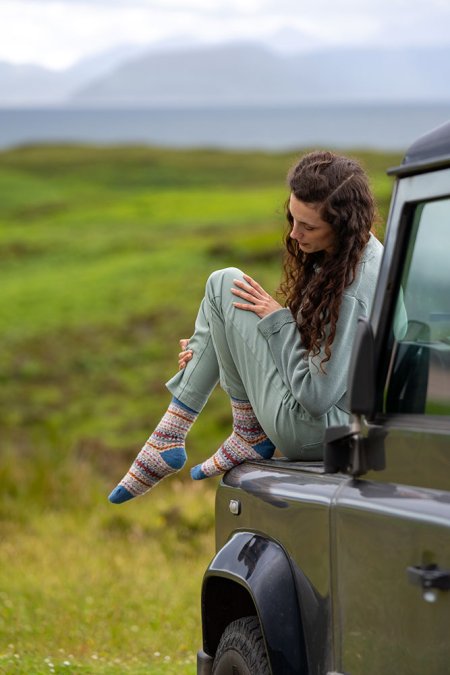
Comfortable loungewear comes down to three things: fabric that feels soft against the skin, a cut that moves with you, and a waistband or hem that doesn't dig in after an hour on the sofa. At Gemjar socks, we've built our bamboo range around exactly those factors.
Softness is the first thing to check. Look for fibres described as brushed, plush or buttery, and avoid anything that feels scratchy in the shop. Breathability matters just as much, since trapped heat turns a cosy evening into a sweaty one.
Fit is the factor shoppers underestimate most. Relaxed cuts are the point of loungewear, but a set that's too large will bunch at the knees and slide down the hips. Check the size chart against your measurements rather than your usual size in fitted clothing, and pick a waistband that holds without pinching.
Watch out: avoid buying loungewear purely on colour or print. A pretty set that pills after two washes or loses its stretch will feel worse than a plainer one that keeps its shape.
Fabric Choices by Climate and Season
Most loungewear guides tell you to pick a soft fabric and stop there. The more useful question is which soft fabric suits your climate, your home's temperature, and how long you actually wear the piece. The same set that feels perfect in a cold bedroom can turn clammy in a warm one, so it helps to understand how the common loungewear fabrics behave before you buy.
Cotton is the most familiar option. It breathes well, feels crisp at first and softens with washing, and it handles warm rooms and mild climates comfortably. Its weakness is warmth: a light cotton set won't hold heat in a cold house, and cotton holds moisture rather than pushing it away, so it can feel damp after a long, warm evening. Jersey cotton and brushed cotton are heavier versions that trap more warmth for cooler months.
Modal and bamboo viscose sit close to cotton in feel but tend to be smoother and more fluid against the skin. They drape rather than cling, which makes them a common choice for people who dislike fabric sticking to them, and they wick moisture better than plain cotton in most everyday conditions. They are lighter and cooler than fleece, so they suit warm bedrooms, mild climates, and year-round wear in centrally heated homes. They are less insulating than brushed cotton or fleece, so very cold rooms usually need a layer over them.
Fleece and brushed-back knits are the warmest common loungewear fabrics. The brushed inner surface traps a layer of warm air against the body, which is why a fleece set feels cosy on a cold floor and unbearable once the heating is on. Fleece is also the bulkiest and least breathable of the group, and it can pill where it rubs, so it rewards gentle washing and suits short, cold-weather wear rather than all-day lounging in a warm room.
Synthetic blends vary widely. A small amount of elastane added to cotton, modal, or bamboo gives stretch and helps a waistband or cuff hold its shape, which is genuinely useful in loungewear. All-synthetic fabrics, by contrast, tend to trap heat and odour and are the least breathable option for long wear.
A practical way to choose is to match fabric to the room you relax in rather than to the calendar alone. If your home runs warm or you sleep hot, lean toward modal, bamboo, or light cotton. If you keep the heating low or live in a cold climate, add a brushed cotton or fleece layer for evenings and keep a lighter set for warmer weeks. Mild climates are usually best served by a single mid-weight modal or cotton set plus one warmer top for cold snaps.
Watch out: a fabric described only as 'super soft' tells you nothing about warmth or breathability. Check the fibre content and weight before assuming a set will suit your climate, because a very soft fleece and a very soft modal behave in opposite ways once you're wearing them for hours.
Accessories follow the same logic. Our blue and purple fleece lined cable knit slipper socks have a non-slip sole and soft fleece lining.
The article compares the common loungewear fabrics by how they behave in different rooms and climates.
| Fabric | Best for | Key difference |
|---|---|---|
| Cotton | Warm rooms and mild climates | Breathes well but holds moisture |
| Modal and bamboo viscose | Warm bedrooms and year-round wear | Smooth, drapes well, wicks moisture |
| Fleece and brushed-back knits | Cold rooms and short cold-weather wear | Warmest, least breathable, can pill |
| Synthetic blends | Stretch and shape retention | Elastane adds stretch; all-synthetic traps heat |
Bamboo Loungewear: Softness, Breathability and Skin Sensitivity
Bamboo fibre is a popular choice for loungewear. It feels smooth and soft, and it breathes well. Our bamboo pyjamas are made from 95% bamboo fibre, which gives them a light, silky feel that many shoppers notice straight away. You can see how bamboo underwear options feel against the skin.
Bamboo's breathability and moisture-wicking qualities make it practical year-round.
Our bamboo pyjamas feature satin trims, faux shell buttons and a breast pocket on the shirt.
Best for: people who want soft, breathable nightwear and loungewear for year-round use. Skip if: you need a heavy, insulating fabric for very cold rooms without extra layers.
Loungewear Sets for Ladies Versus Separates
The set-or-separates decision is really a fit decision. A matching set is only convenient if both pieces fit you well, and separates only give you flexibility if you already know which cuts work on your body. Getting this right matters more than the styling, because a set that fits properly gets worn every evening while a mismatched one stays in the drawer.
Start with the cut. Loungewear generally comes in three fits, and each suits different preferences. Relaxed cuts sit close to your usual size with room to move, the safest choice if you want comfort without bulk. Oversized cuts are deliberately larger through the body and sleeve; they feel airy but can bunch at the knees, slide at the waist, and swamp a shorter frame. Fitted cuts, often with stretch, suit people who dislike loose fabric catching on things, but they leave less room for temperature swings. A common pattern is to size down in an oversized set and stay true to size in a relaxed one.
Check the size chart against your measurements rather than your usual size in fitted clothing, because loungewear is cut with more ease. Pay particular attention to three numbers: the waist measurement (an elasticated waist should sit flat without pinching), the inseam (a jogger that's too long will drag and wear at the hem), and the hip measurement for pull-on bottoms. If you're between sizes, the waistband and the fabric's stretch matter more than the label.
Body shape changes which cut feels best, not whether loungewear suits you. If you carry weight through the middle, a drawstring or wide flat waistband distributes pressure better than a narrow elastic one. If you're tall, check inseam length and sleeve length, since oversized cuts often run short in the body. If you're petite, a relaxed rather than oversized cut keeps proportions without extra fabric pooling at the ankles and wrists. For anyone with sensory sensitivities, look for tag-free labels, flat seams, and non-restrictive cuffs, since a scratchy tag or tight cuff undoes the comfort of an otherwise soft fabric.
Then decide between a set and separates. Choose a matching set if you want a coordinated look with minimal effort, if you like to wear loungewear beyond the front room, or if you've found a brand whose fit you trust across both pieces. Choose separates if your top and bottom sizes differ, if you run hot on top and cold on the bottom (or the reverse), or if you prefer to layer a warm top over lighter bottoms as the weather changes.
Whichever you choose, check that the top and bottoms are cut from the same fabric weight, so they wash and wear at the same rate. A heavy fleece top paired with a light modal bottom will age unevenly and feel mismatched in temperature.
Watch out: buying a set purely on the model's height or the product photo is the most common sizing mistake. Compare the listed measurements to a piece you already own and love, and treat the size label as a starting point rather than a guarantee.
Super Soft Loungewear Sets Worth Considering
When you're shortlisting sets, judge them on fabric feel, fit across the body, and how they hold up after washing. Many shoppers find that the softest sets lose their feel within months if they're washed too hot or dried in a tumble dryer, so follow the care label closely.
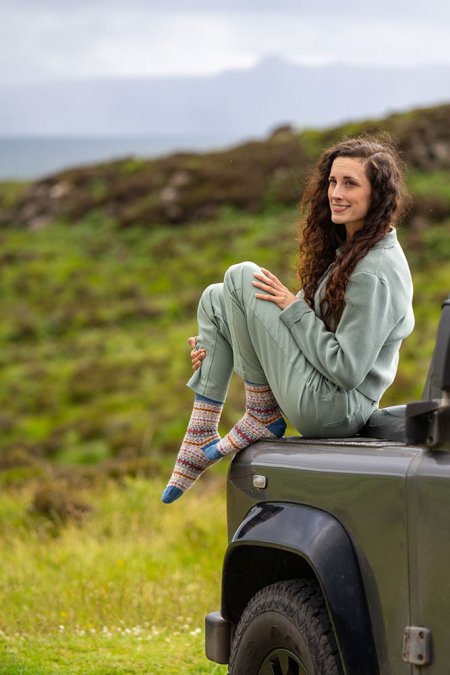
Compare options on the criteria that matter to you: softness on the skin, weight for your climate, waistband comfort, and price per wear. A full women's luxury loungewear sets guide walks through the styles side by side. A set you reach for every evening is better value than a cheaper one that stays in the drawer.
Comfortable Pyjamas for Relaxing at Home
Pyjamas are where loungewear comfort matters most, since you wear them for hours while you sleep. Look for an elasticated waist that stays in place without digging in, a relaxed leg that doesn't restrict movement, and a fabric that stays comfortable across the night.
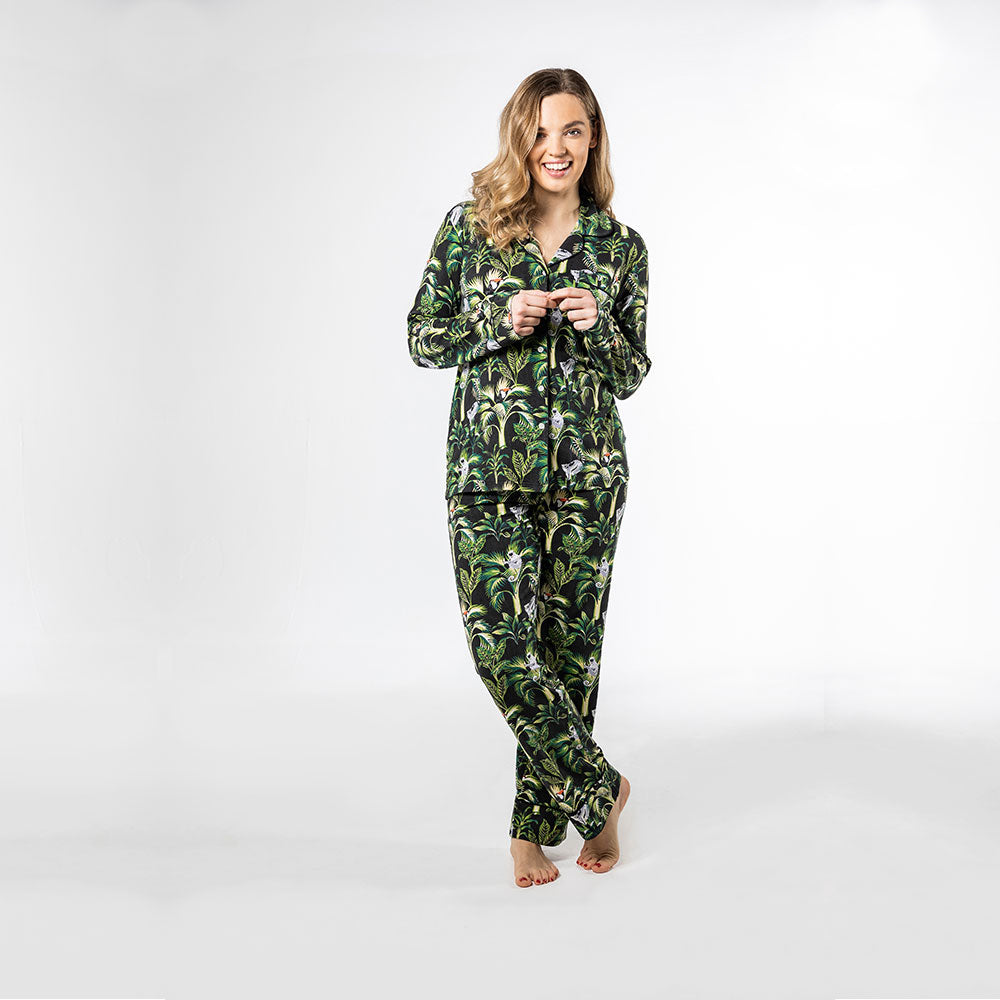
Our jungle print bamboo pyjamas are made from 95% bamboo fibre, and they're available in small, medium and large.
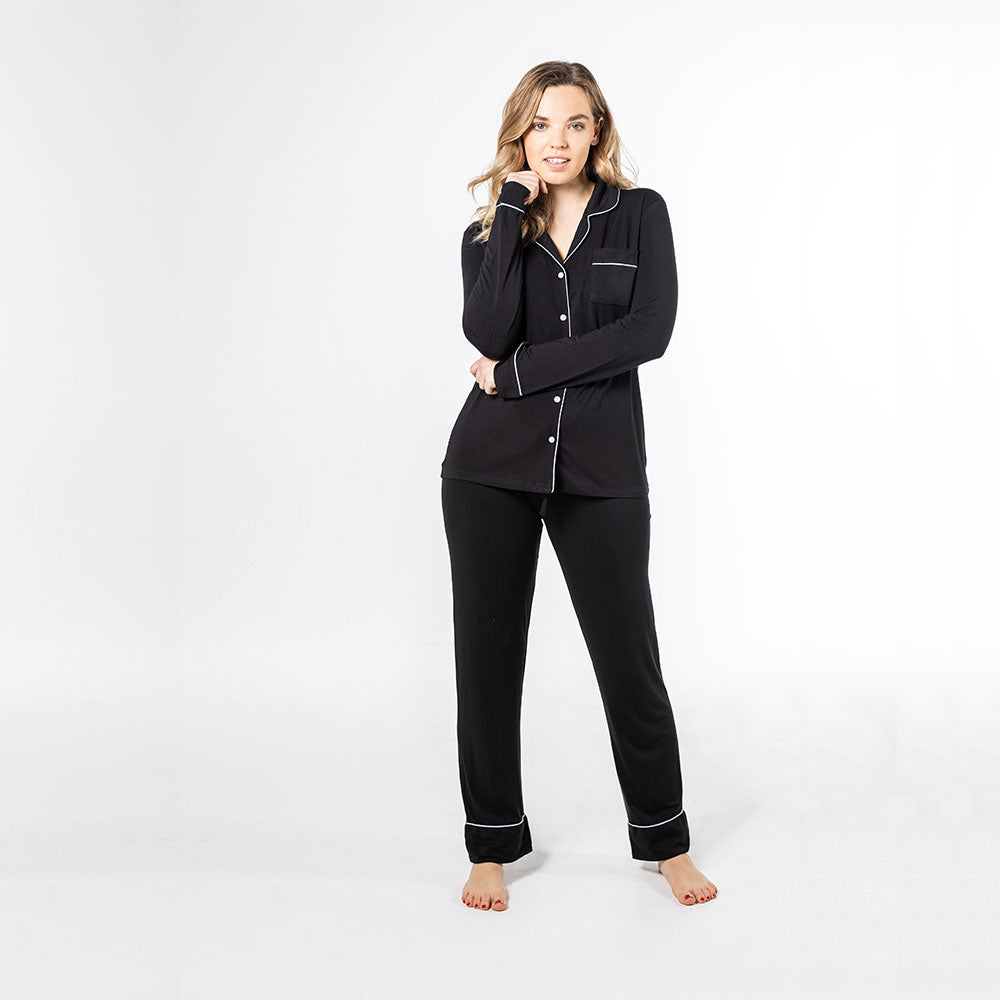
If you prefer a more understated look, our black bamboo pyjamas are made from 95% bamboo fibre, with an elasticated waist and a satin trim.
Choosing Your Next Loungewear Set Based on Your Needs
The right loungewear depends on how you'll use it. Start with the season and climate, then consider how much you move around at home, how sensitive your skin is, and whether you want matching sets or flexible separates.
If you mostly want something soft to relax in, prioritise fabric feel and fit. If you wear your loungewear for longer stretches, check breathability and how the set holds its shape after washing. And if you're buying as a gift, a set with a clear size chart and easy-to-read care instructions makes it easier to get right the first time.
Browse our full collection to find the bamboo pyjamas and slipper socks.
Frequently Asked Questions
What is the most comfortable loungewear?
The most comfortable loungewear is usually a soft, breathable natural or semi-natural fabric cut with a relaxed fit and no tight seams or elastic at the waist. Bamboo fibre is a soft option that feels smooth against the skin. Fleece suits cold rooms and winter evenings. Look for pieces that let you move freely and sit for long periods without pinching, since comfort depends on fit as much as fabric.
Are loungewear sets better than separates for relaxing at home?
Loungewear sets suit people who want a coordinated look with less thinking about outfits, and matching tops and bottoms usually share a fabric weight and feel. Separates give more flexibility, so you can mix a warm sweatshirt with lighter bottoms or pair a favourite top with different pyjama trousers. For all-day comfort at home, sets are simpler; for varied temperatures or sizing needs, separates often fit better.
Which fabrics are best for comfortable loungewear?
Bamboo fibre, cotton, and fleece are the most common choices for home loungewear. Bamboo is soft and breathable. Cotton is familiar and easy to wash. Fleece gives warmth for cold months. Gemjar's bamboo pyjamas are 95% bamboo fibre, soft, breathable and moisture-wicking.
Can you wear loungewear outside the house?
Many loungewear pieces work for running errands or casual outings, especially coordinated sets in neutral colours with a clean finish. Pyjama-style pieces with satin trims or pocket details look more polished than plain jersey sets. Choose the outfit based on how dressed up you need to be, and keep sleepwear designs for home use if you want a clear line between the two.

